
The Greek Legend of the Gorgon Medusa
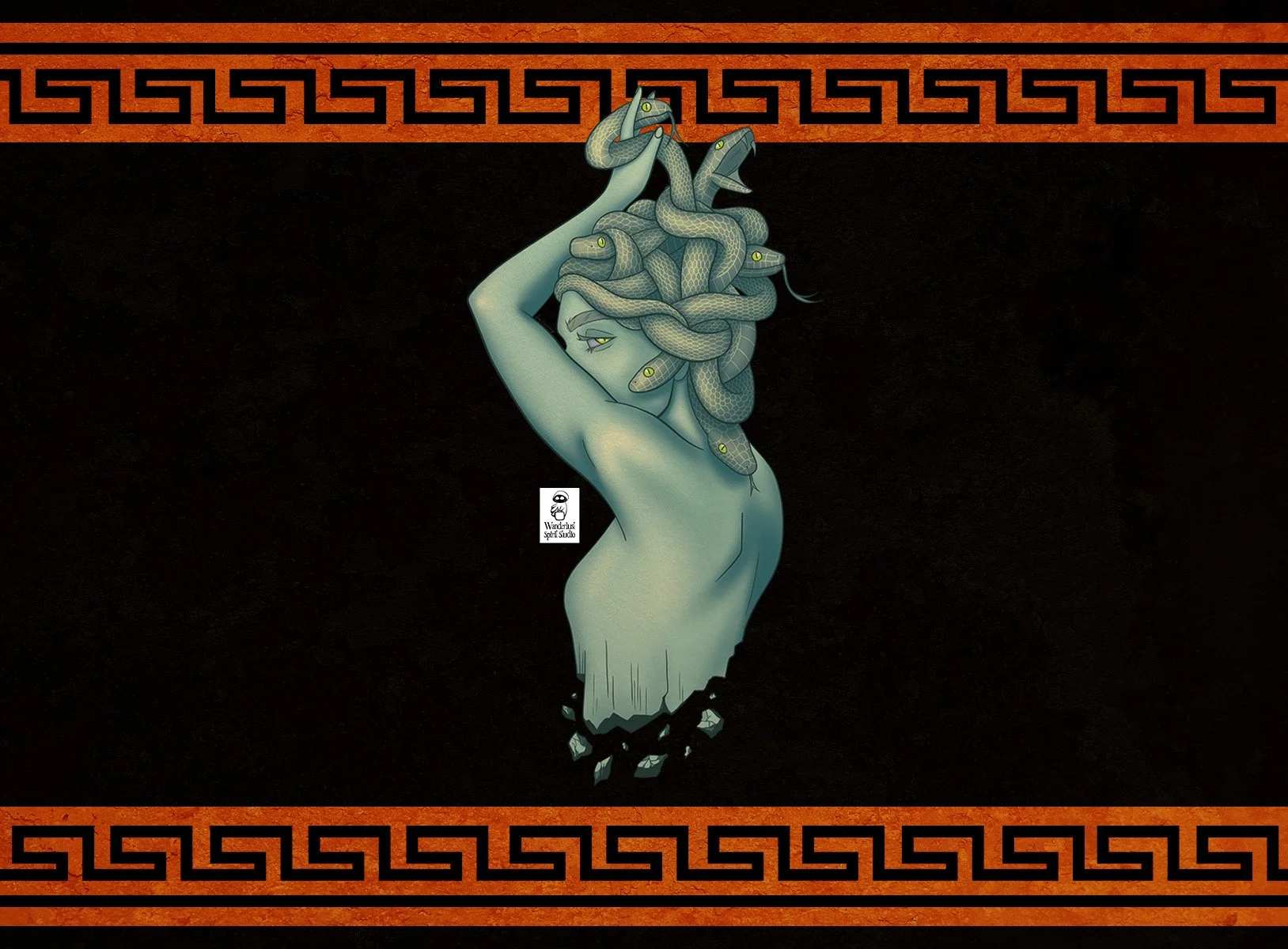
Medusa, the Greek Gorgon with hair of snakes.
If you're familiar with Greek mythology, you've probably heard of the Gorgon Medusa, but do you know her full story? Depending on the source, Medusa's origins differ. In some of the earliest accounts, she was born with her monstrous appearance, complete with serpentine hair, and was the only mortal among the three Gorgon sisters: Stheno, Euryale, and Medusa. However, the most tragic and widely recognized version tells of Medusa as a breathtakingly beautiful human maiden before she was transformed into the monster we know today.
According to this later legend, Medusa was once a beautiful priestess in the temple of Athena, the goddess of wisdom and strategic warfare. Her beauty caught the attention of Poseidon, god of the sea. He pursued her and took her for his own within Athena's sacred temple, desecrating the sanctuary in the process. Ancient sources differ on whether this encounter was consensual, and modern readers often debate its interpretation. Given the immense imbalance of power between a mortal woman and a god, many view Medusa as a victim regardless.
This act enraged Athena, but rather than punishing Poseidon, the immortal god responsible, she directed her wrath toward Medusa. Poseidon walked away unscathed, leaving Medusa alone to bear the consequences. Her flowing hair was transformed into a writhing mass of venomous snakes, and her gaze became so fearsome that anyone who looked directly into her eyes would be turned to stone.
From that moment on, Medusa was feared as a monster, a Gorgon with living snakes for hair and a gaze that could petrify anyone who met her eyes. Cursed with a form that isolated her from humanity, she became a figure of terror, condemned to a life of loneliness and exile.
Her suffering did not end there. King Polydectes ordered the hero Perseus to bring back Medusa's head. Athena aided Perseus by lending him Aegis, her polished shield, allowing him to view Medusa's reflection rather than looking directly at her. Using the shield as a mirror, Perseus approached safely and beheaded Medusa. Even in death, her head retained its petrifying power. From the blood of her severed neck sprang Pegasus, the winged horse, and Chrysaor, the giant warrior, children she had conceived with Poseidon.
Perseus later used Medusa's severed head to defeat his enemies before presenting it to Athena. The goddess placed the Gorgon's head upon Aegis, where it became a powerful symbol of protection, capable of warding off evil. Today, Medusa has also been reclaimed by many as a symbol of resilience, survival, and female empowerment.
After hearing this side of her story, do you still see Medusa as a vicious monster—or as a tragic victim of the gods?
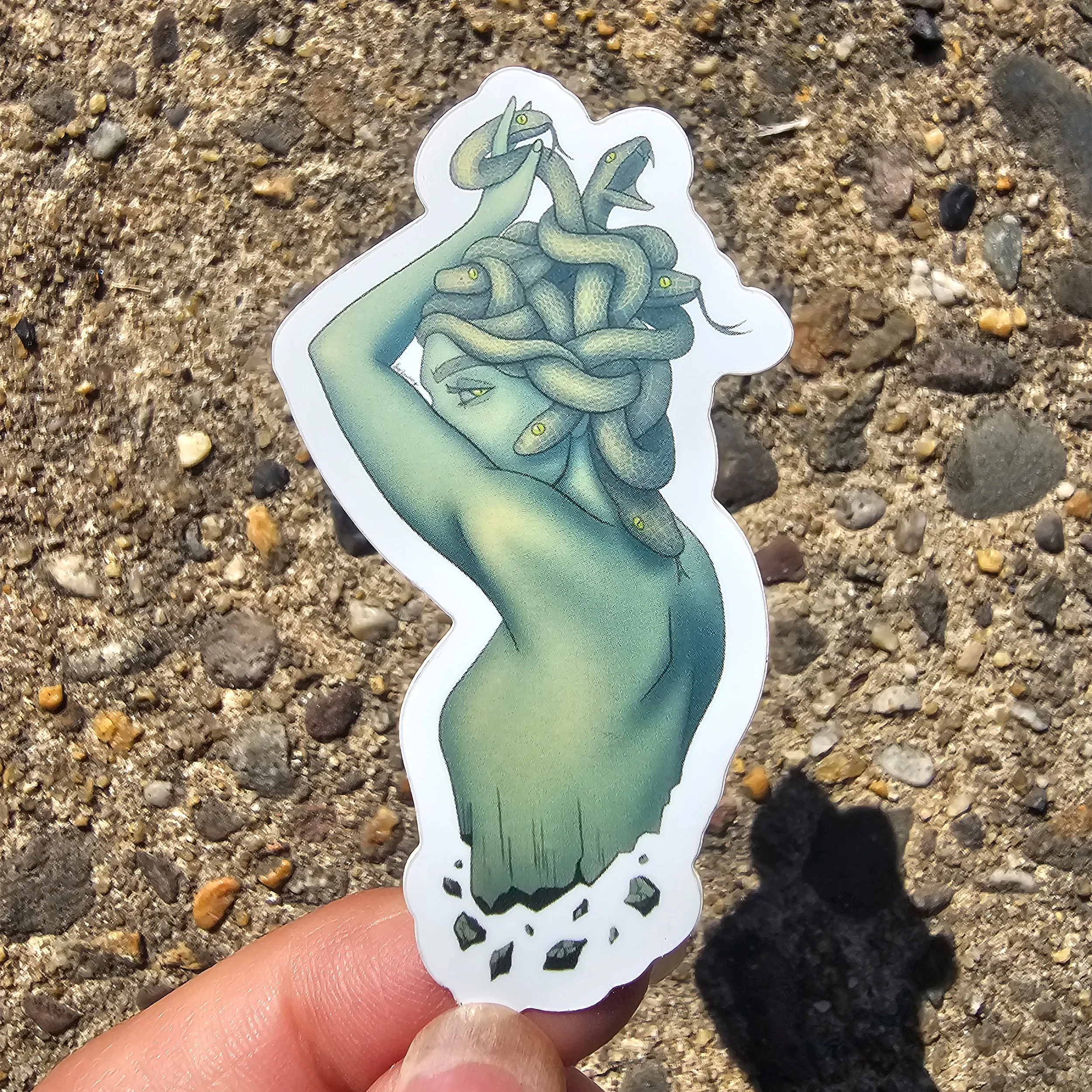
Made from durable glossy vinyl, this sticker is waterproof, scratch-resistant, and dishwasher-safe for long-lasting use indoors or outdoors.

The Gildan Softstyle 64000 tee redefines casual comfort with a modern unisex cut and ultra-soft materials. Perfect for fans of Greek mythology, feminist aesthetics, wearable art, edgy streetwear, and alternative fashion.